Ever looked at your roof after a storm and wondered if it’s built to take another hit? You're not alone, a lot of homeowners ask if upgrading to impact resistant shingles is really worth the extra cost.
If you’ve been weighing whether an impact resistant roof could actually save you from surprise repairs or help with insurance, this guide breaks down everything clearly. We’ll explore how these shingles work, what sets them apart, and whether companies like IBEX Roof recommend them based on where you live and what kind of protection you need.
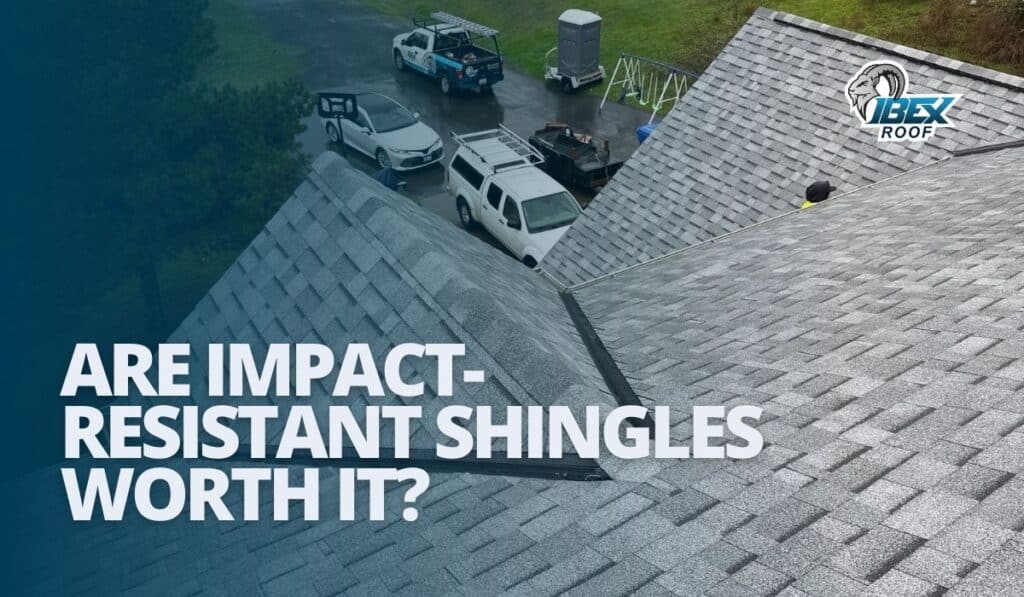
Impact resistant shingles are built to take a harder hit than the typical roof shingle. They’re made to stand up better when hail, branches, or debris land on your roof, so you’re less likely to see cracks or loose granules after a storm.
Regular shingles still get the job done, but they’re easier to bruise or break when the weather turns rough. Big brands like GAF, Owens Corning, CertainTeed, and DaVinci all make impact resistant options, so you can choose a tougher shingle without giving up the style you want for your home.
Roofing manufacturers use a test called UL 2218 to rate how well a shingle handles impact. The ratings run from Class 1 to Class 4, and Class 4 is the top level, meaning the shingle held up better under controlled hits in the lab.
For a homeowner, a Class 4 impact resistant shingle means a roof that’s built with extra protection in mind. Groups like FM Approvals and IBHS also run their own testing that looks more like real storms, which helps confirm whether a product can hold its own when the weather gets rough.
Choosing impact resistant shingles is really about avoiding headaches after bad weather. Instead of wondering how much damage the last storm caused, you’re giving your roof a better chance to come through in good shape.
For many homeowners, especially those working with a contractor like IBEX Roof, these benefits add up to a roof that feels like a smarter long-term move. You’re not just changing how your roof looks, you’re changing how it stands up to the weather year after year.
When you’re looking at impact-resistant shingles, it helps to see both sides of the decision. There are clear benefits in protection and peace of mind, but there are also trade-offs that matter for your budget and your home.
Pros: You get tougher roof shingles that are built to handle harsher weather and can cut down on future repairs. Some homeowners also see better long-term value when they choose a class 4 shingle as part of a full roof replacement.
Cons: You’ll usually pay more up front, and not every home or climate truly needs impact-resistant roof shingles. The extra cost only makes sense if it lines up with your local weather and how long you plan to stay in the home.
Whether impact-resistant shingles are worth it comes down to your specific situation, not just what looks good on paper. Your local hail and storm risk, the age and condition of your current roof, and how much room you have in your budget all play a big role.
If you’re in an area that sees frequent hail, strong winds, or heavy storms, a class 4 impact-resistant roof can feel like a smart upgrade rather than a luxury. On the other hand, if weather risks are low and your current roof still has life left, it may make more sense to plan ahead and save for a future replacement instead of rushing into a premium system today.
When you’re picking impact-resistant materials, think about three things: how much you want to spend, how you want the roof to look, and what your weather is really like. Asphalt options usually keep costs lower and blend in easily with nearby homes, while synthetic products lean more premium and can offer extra durability and style.
It also helps to hear straight from the roofer what they’d actually install on a house like yours. Ask which brands have done well in your area, whether the product is truly tested as a Class 4 shingle, and how long they typically see those roofs last. Follow up with simple questions on the warranty and any upkeep you should plan for so you’re not guessing later
Reach out to a roofing pro when the roof is starting to age, shingles are curling or missing, or storms have been rougher than usual. A visit like that can tell you whether a repair is enough or if it’s smarter to plan on impact-resistant shingles with your next new roof.
During an inspection, the roofer can look at the shingles, flashing, and decking, check for hidden leaks, and note anything that might matter for insurance. If you’re on the fence, scheduling a simple quote or roof check with a local contractor gives you real numbers and clear options instead of guessing what to do next.
They were very responsive to a couple of installation issues and followed through with the business philosophy of finding a solution that would work. Thanks Jeff for your work... read more

 Jerry Willey
I wont to thank all of the people that worked extremely hard on both in being honest and doing a great job, and in fast in have enough... read more
 Jody Koelling
Nick and Jeff E. were great. They both took the time to make sure we understood our options, answered our questions and we were able to make the best choice... read more
 Donavan Anderson
Good price for good work. Crew did full strip and reroof for our two story house in 2 days. Looked great when done. Important to work with a roofing company... read more
 Steve Wetterling
Jeff Eason did a fantastic job and found cost effective ways to avoid high costs
 John Bonomi Jr.
We actually stumbled across IBEX at the Tigard Festival of Balloons and scheduled a free estimate to have our roof cleaned. And I'm so glad we did! Miguel... read more
 Amanda Case
Jeff Eason, our project manager, made sure to handle our project with care and attention. He kept us in the loop of what was happening and was generous with providing... read more
 Rory Parsons
Jeff Eason took great care of me. He kept me up to date each step of the way. I added gutter replacement to my reroofing job and have me regrets!... read more
 Michelle Huffman
Jeff Eason project manager did a wonderful job and gave me the best deal on gutters
 Allen Kosin
Jeff Eason and his crew are professionals who care about the customer. He and his crew arrived promptly at scheduled times. The crew worked efficiently and the roof was installed... read more
 Laura Guerra